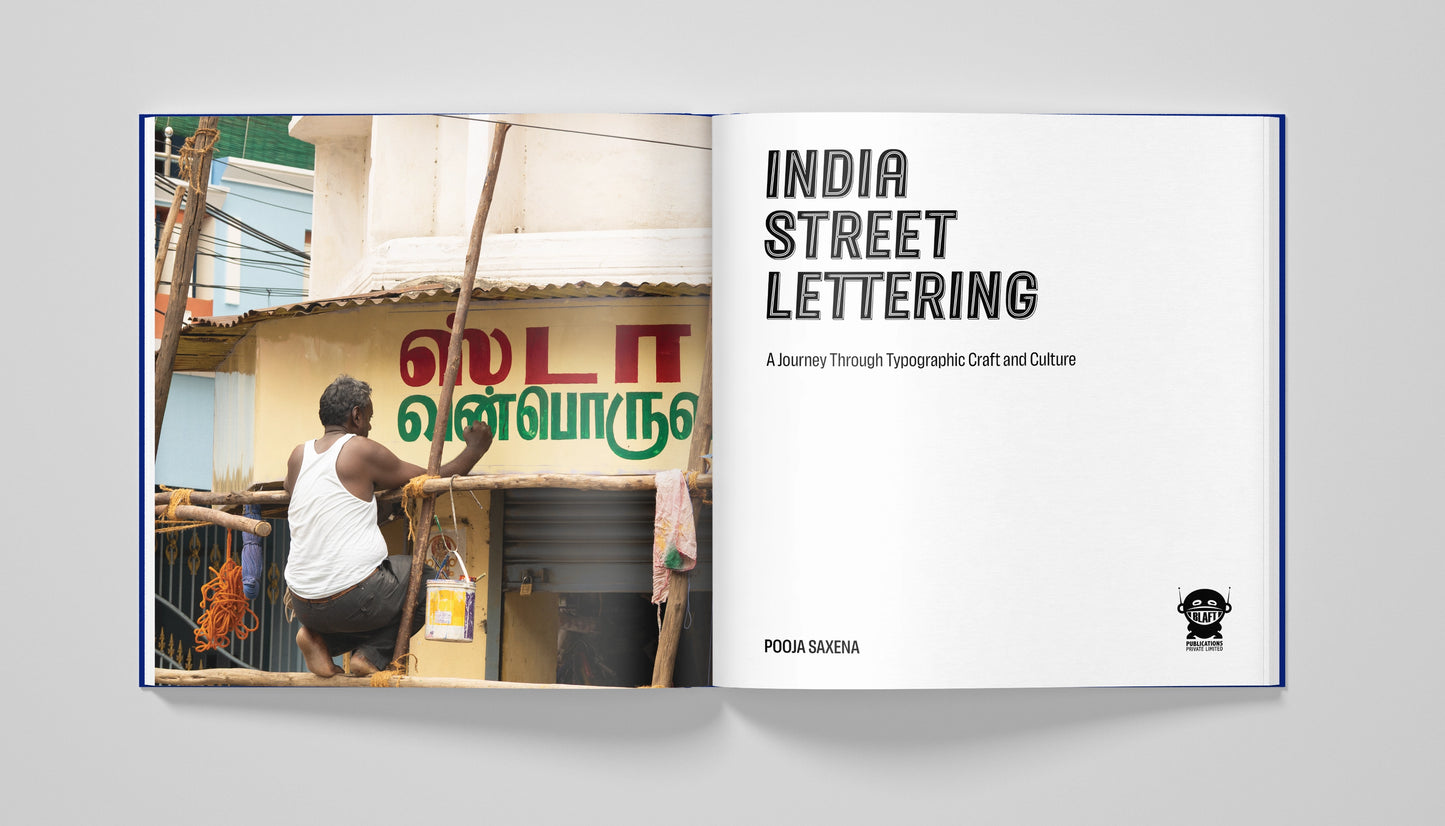
In India Street Lettering: A Journey Through Typographic Craft & Culture, Pooja Saxena shines a spotlight on the country’s urban letterforms—and the surprising stories behind them.
Take a short walk in any Indian neighbourhood and you’ll find signboards in a profusion of languages, styles, materials, and colours. So far, this living typographic archive has existed on the fringes of mainstream design discourse. India Street Lettering brings it to the fore, celebrating the artistic expression, linguistic diversity, and historical intrigue found in the vibrant letterforms around the country.
Drawing from a decade of documentation and research, India Street Lettering: A Journey Through Typographic Craft & Culture is a showcase of the country’s lively public lettering landscape, and an emphatic call to give this artistry the place it deserves in the design canon.
The book is divided into five chapters that scrutinise how signs are imagined — on shops, restaurants, cinemas, banks, post offices, even homes — and the role that typography and cultural history play in their design. Together, the chapters feature over 300 photographs from 17 cities and in 13 scripts, painting a vivid picture of urban neighbourhoods in India.
ISBN 978-93-80636-97-9
Hardcover
8 inches × 8 inches
208 pp
Published by Blaft Publications
Praise for the book
[India Street Lettering] is fabulous… every spread glows… Pooja’s incandescent compendium is a required purchase for anyone interested in typography, graphic design, and/or urban space.
Robin Sloan
India Street Lettering is a warm, thoughtful look at the signs that quietly shape India’s streets… It’s part archive, part love letter, and a deeply satisfying record of India’s everyday typography.
Sheya Kurian, The Nod
For anyone concerned with preserving craft knowledge, [India Street Lettering] is a reminder that some archives only exist if individuals commit to building them, sign by sign, before the digital printers arrive.
Tom May, Creative Boom
Documenting public lettering of a country colonized until 1947, whose vast typographic heritage ended up in British institutions rather than where it belongs, [is] an act of resistance.
Flavia Zimbardi, Contraforma
Explore other Blaft items in this Shop